
Journalism 101

Journalism Lab

Learn how reporters find what matters, verify what is true, and shape information into stories people can trust.

Journalist working with newsroom materials

First principles

Journalism is the first draft of history.

Journalists document events as they happen, creating the earliest version of how history is understood before historians later analyze and interpret it.

01

What is News?

News is information about recent events or issues that are relevant, timely, and important to the public. Good journalism selects stories based on impact, relevance, timeliness, and public interest—not just what is interesting, but what matters.

02

Facts vs. Opinion

A fact is a statement that can be verified with evidence, such as data, documents, or direct observation. An opinion is a belief, interpretation, or judgment that reflects a person's perspective. News reporting should be objective, neutral, and evidence-based, while opinion writing is subjective and persuasive.

Key points
  • Example fact: "A protest took place in Boston Common."
  • Example opinion: "Protests should be banned from Boston Common."
03

Types of Ledes

A lede is the opening sentence of a news story. It is designed to capture attention and deliver key information.

Key points
  • Summary lede (hard news lede): a direct approach that delivers the most essential, time-sensitive information, typically following the inverted pyramid style.
  • Feature lede (delayed lede): sets a scene, tells a story, or hooks the reader emotionally before diving into the main topic.
  • Blind lede: a summary that intentionally withholds a key detail, such as a name, to build suspense.
04

Code of Ethics

A code of ethics is a set of principles that guide journalists to report responsibly, fairly, and truthfully.

Key points
  • Seek truth and report it
  • Verify sources
  • Avoid conflicts of interest
  • Allow subjects to respond
  • Be accountable and correct mistakes
A photojournalist documenting an event

Through the lens

What is photojournalism?

Photojournalism uses images to tell news stories and document real-world events. Photos provide visual evidence, capture emotion and context, and help audiences understand a situation.

Images can also mislead—especially in the age of digital editing and AI—so journalists must apply the same verification and ethics to visuals as they do to words.

Beyond the classroom

Press Pass

Press Pass is PATH-J's monthly speaker series designed to connect students with journalists, editors, and professionals across media and related fields. Through these sessions, students gain insight into how journalism works in the real world—beyond the classroom.

Each conversation offers a closer look at how stories are developed, how decisions are made in newsrooms, and how media shapes the way we understand the world.

Who students meet
  • Journalists from local and national news organizations
  • Editors and content creators
  • Media professionals working in politics, technology, and culture
  • Civic leaders and researchers connected to public discourse
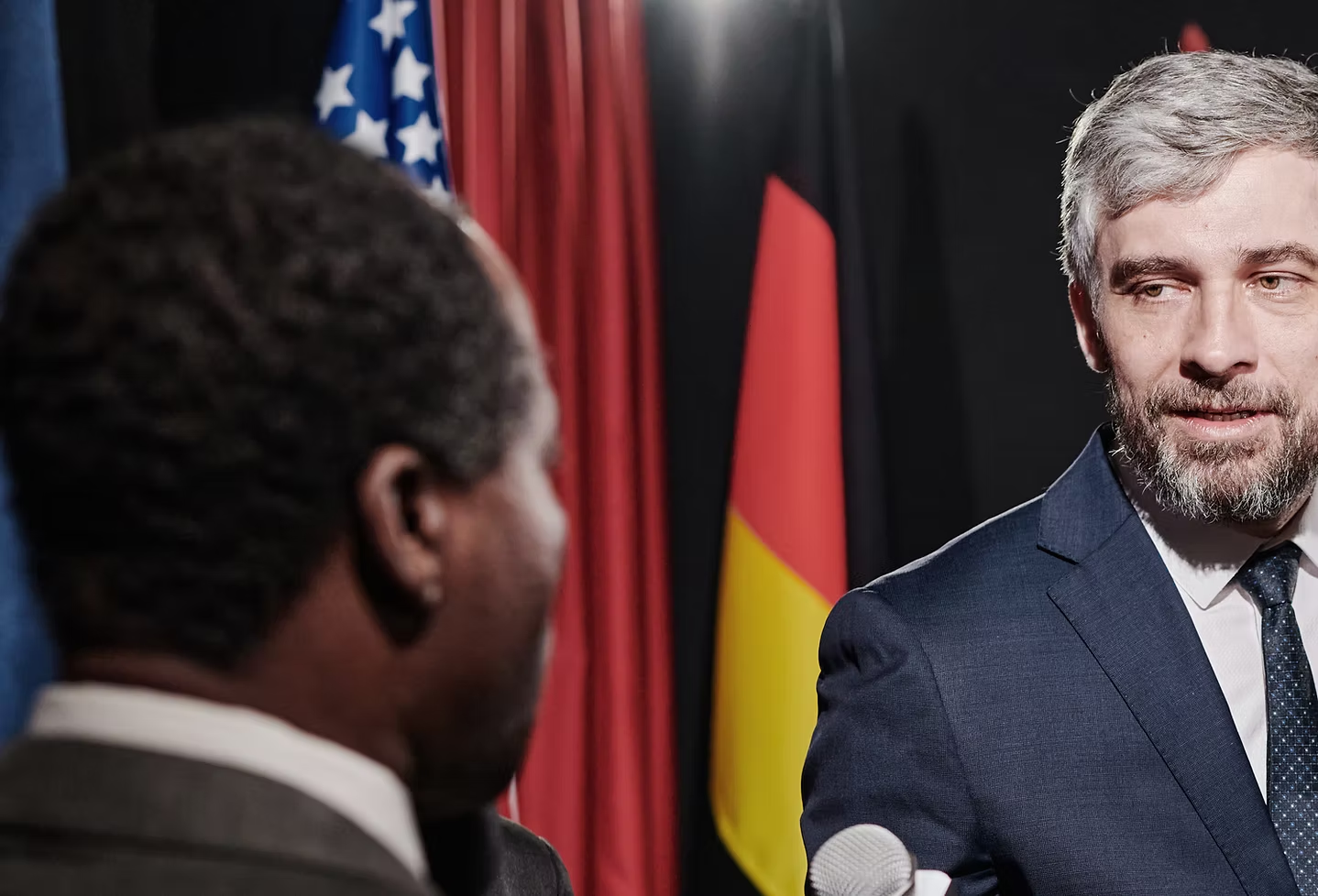
A newsroom press conference

Young Journalist Workshop

Learn by reporting.

Students practice interviews, fact-checking, source evaluation, ethics, and producing a short journalism piece independently or collaboratively.

Workshop outcomes
  1. Conduct basic reporting, including interviews and fact-checking
  2. Distinguish news, opinion, and advertising media
  3. Write or produce a short journalism piece independently or collaboratively
  4. Evaluate sources for credibility, bias, and evidence
  5. Identify misinformation and disinformation
  6. Understand journalistic ethics and civic responsibility
Audience
Grades 6–8, with a potential high school branch
Format
Weekly spring sessions with optional summer intensives
Session
90 minutes recommended
Location
Milton Public Library, 476 Canton Ave